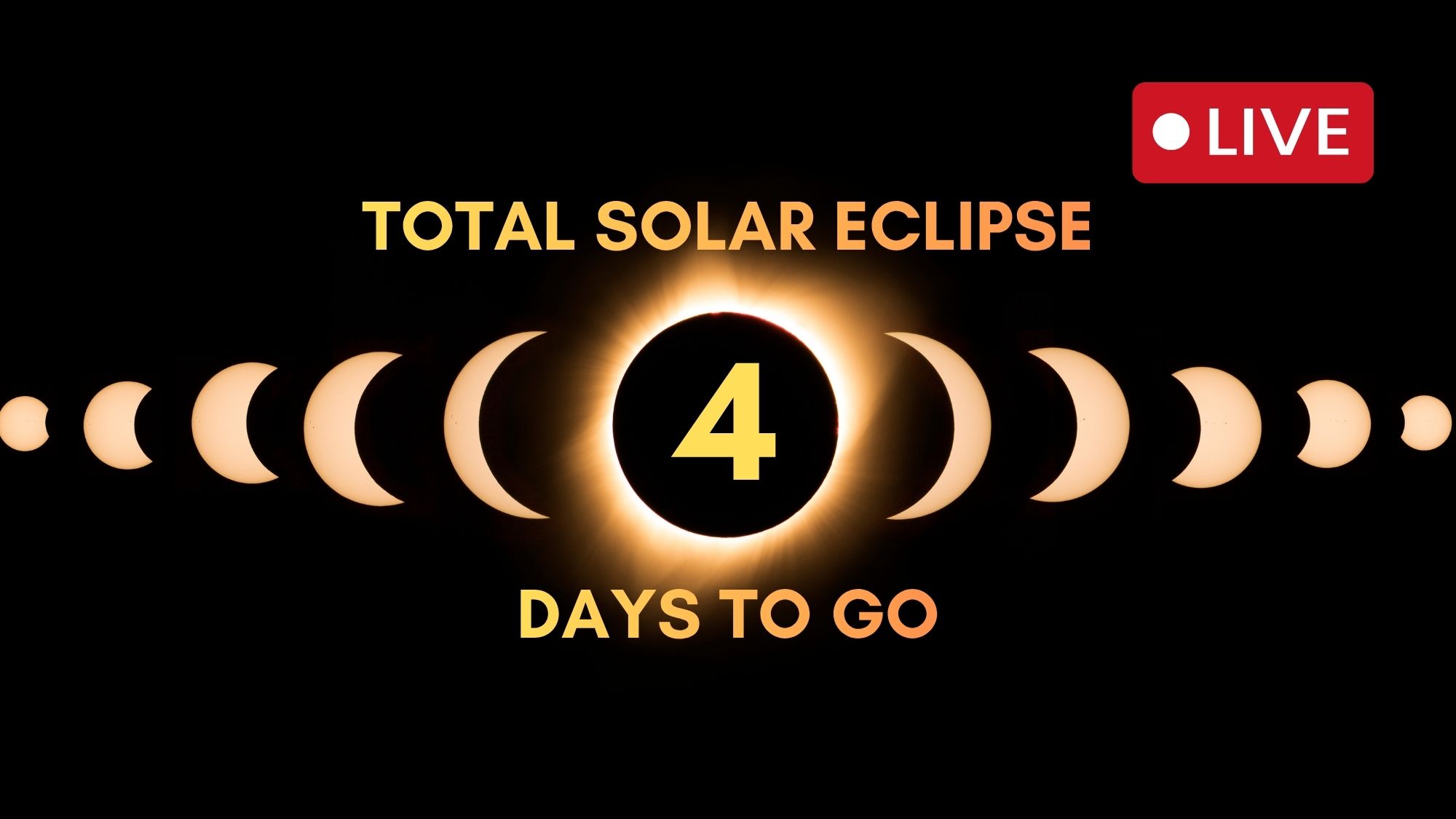
The Primal Allure of Celestial Shadows
There’s something deeply primal about standing under a total solar eclipse. It’s not just a scientific phenomenon; it’s a visceral reminder that we’re tiny players in a vast cosmic dance. On August 12, 2026, when the moon’s shadow sweeps across Greenland, Iceland, and Spain, millions will crane their necks skyward—not just to observe, but to feel the universe’s raw power. Personally, I think this fascination reveals something fundamental about human nature: our relentless need to find meaning in the incomprehensible. A total eclipse isn’t just a spectacle; it’s a mirror held up to our collective curiosity and existential wonder.
The Path of Unity (and Logistics)
The 2026 eclipse path connects some of Earth’s most dramatic landscapes: Greenland’s icy fjords, Iceland’s volcanic horizons, and Spain’s sun-drenched plains. What strikes me isn’t just the geography, but what this route symbolizes—a rare thread stitching together disparate cultures under one celestial event. Yet, as any seasoned eclipse chaser knows, logistics matter more than we’d like. The Arctic expeditions and DEB citizen science projects highlight humanity’s stubborn determination to conquer nature’s unpredictability. Daisy Dobrijevic’s Arctic voyage, for instance, isn’t just about luck; it’s a microcosm of our obsession with control in the face of chaos. Will clouds spoil the view? Maybe—but even then, as the article notes, thin cloud cover can’t fully mute the drama. That’s the universe’s cheeky way of reminding us who’s in charge.
Science Meets Spectacle: Why the Corona Captivates
The sun’s corona—a shimmering halo visible only during totality—gets all the attention, and rightly so. But what fascinates me most is how this fleeting glimpse of solar atmosphere bridges hard science and poetic awe. Researchers will undoubtedly gather critical data about solar winds and magnetic fields, but the average observer? They’ll just feel something. That duality is the eclipse’s magic trick: it turns physicists into poets and tourists into temporary astronomers. The corona’s ethereal beauty isn’t just a scientific curiosity; it’s a universal language. One thing that immediately stands out is how this event democratizes wonder—whether you’re on a luxury cruise or squinting through a pinhole projector, totality hits you the same way.
The Art of Anticipation: Why We Prepare (and Panic)
Let’s talk about eclipse glasses. The scramble to secure ISO-certified viewers isn’t just about safety—it’s a ritual. I’ve seen it firsthand: people hoard these flimsy cardboard frames like they’re golden tickets. Why? Because preparation becomes a proxy for control. We can’t stop clouds from rolling in or planes from flying overhead, but by God, we’ll protect our retinas. What many people don’t realize is that the anxiety around preparation often eclipses (pun intended) the event itself. The real lesson here? Imperfection enhances the experience. A hazy view or a last-minute gear failure doesn’t negate the primal thrill of watching daylight vanish. If anything, it makes the moment feel more human.
Beyond the Visual: A Multisensory Eclipse
Eclipses aren’t just visual spectacles—they’re full-body experiences. The temperature drop, the eerie silence, the way animals instinctively react… these details often get lost in the photo-obsessed frenzy. From my perspective, this sensory overload is what makes totality so transformative. It’s not about capturing the perfect shot; it’s about letting your guard down as the world tilts into twilight. Consider Anthony Wood’s vantage point in Spain, watching the eclipsed sun dip toward the horizon. That low angle isn’t just a photo op—it’s a reminder that eclipses are as much about spatial poetry as orbital mechanics. The sun doesn’t just disappear; it bows out dramatically, like a Shakespearean actor leaving the stage.
Eclipses as Cosmic Mirrors
At their core, eclipses are about perspective. They force us to confront scales beyond our grasp—the moon’s precise distance to make totality possible, the millennia of orbital choreography culminating in a few minutes of awe. This raises a deeper question: why do these events resonate so universally? Is it the reminder of nature’s indifference? The thrill of temporary darkness in a sun-dominated world? Or maybe it’s the rare unity they create—no matter your politics, religion, or nationality, everyone shuts up to watch the sky turn weird. The 2026 eclipse will undoubtedly spawn new scientific insights, but its true legacy will be the collective pause it forces in our hyperconnected lives. What this really suggests is that we’re starved for moments that dwarf our daily trivialities.
The Takeaway: Why We Chase Shadows
Eclipses are cosmic punctuation marks—a hyphen in the sentence of ordinary days. They remind us that wonder isn’t reserved for planetariums or textbooks; it’s baked into the universe’s design. As preparations reach a fever pitch and expeditions chase clear skies, I keep circling back to the same thought: the 2026 eclipse isn’t about the 100-second totality. It’s about the buildup, the shared anticipation, the fleeting connection to something older than Earth itself. And when it’s over? We’ll all go back to scrolling our phones, but a little part of us will still be there—in Scoresby Sund or Valoria la Buena—staring upward, forever changed by a shadow passing overhead.